
A1 Tank Guys removes buried residential heating oil tanks across North and Central New Jersey, from the township permit to the final backfill, at a flat rate you agree to before any digging starts.
Get your FREE
Quote Today
By pressing 'Get a FREE Quote' you are agreeing to our terms and conditions and privacy policy, and consenting to receive text messages from A1 Tank Guys. To unsubscribe, reply STOP.
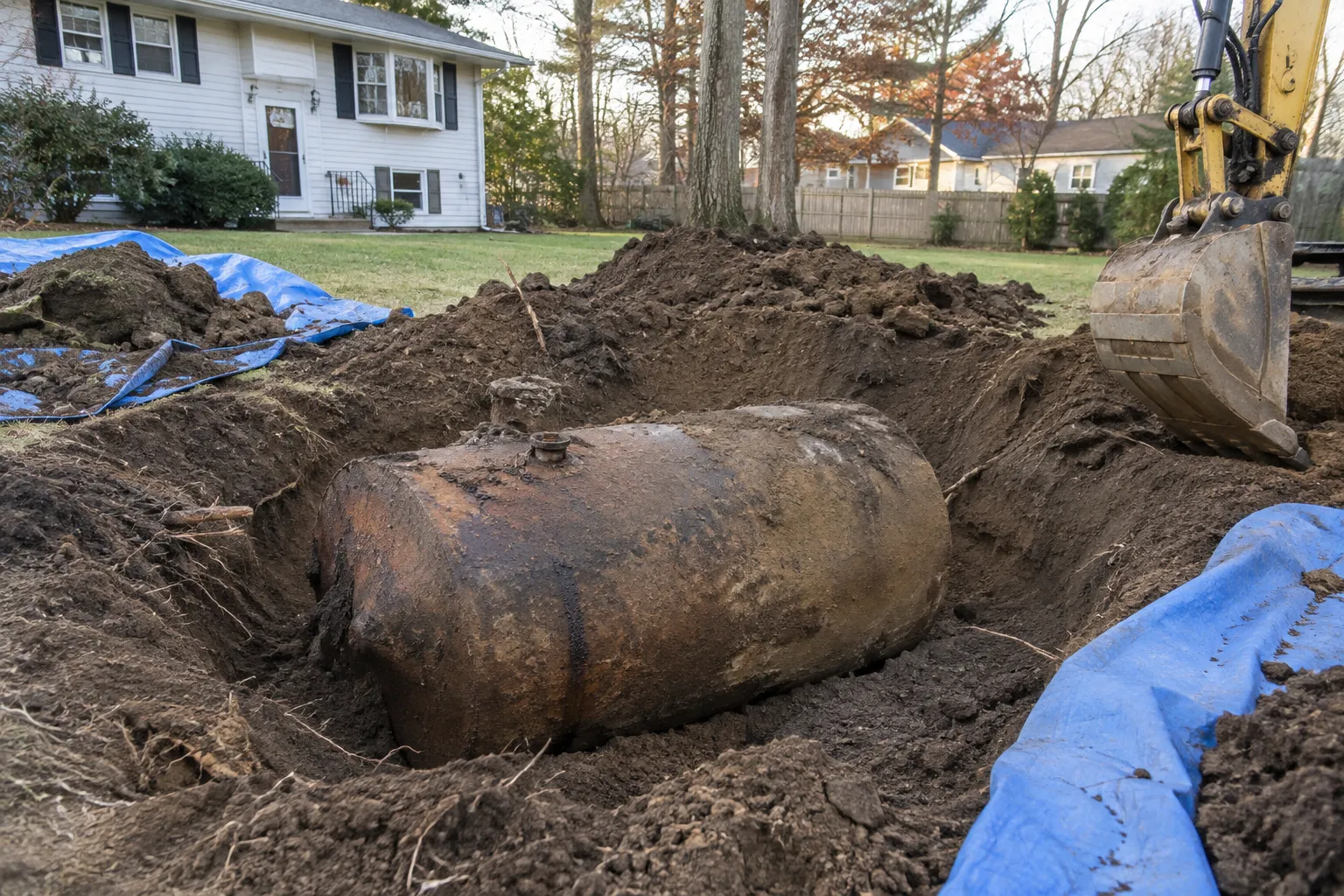
From the first phone call to the final backfill, here is exactly what happens.
Most tanks can be quoted over the phone. We email you a flat-rate contract within minutes of that first call. It is straightforward and easy to read, with no extra charges after the job is done.
Once we have your signed contract, we overnight the permit application to your local building department. Approval takes a few days to a few weeks depending on the town, and we push to speed it up.
When the permit is approved, we call in utility mark-outs and schedule the removal, typically within five business days. An easy-access removal is completed in one business day.
Related services: Soil Testing Around Oil Tanks and Soil Remediation. See all A1 Tank Guys services or call (973) 922-9002 for a free quote.
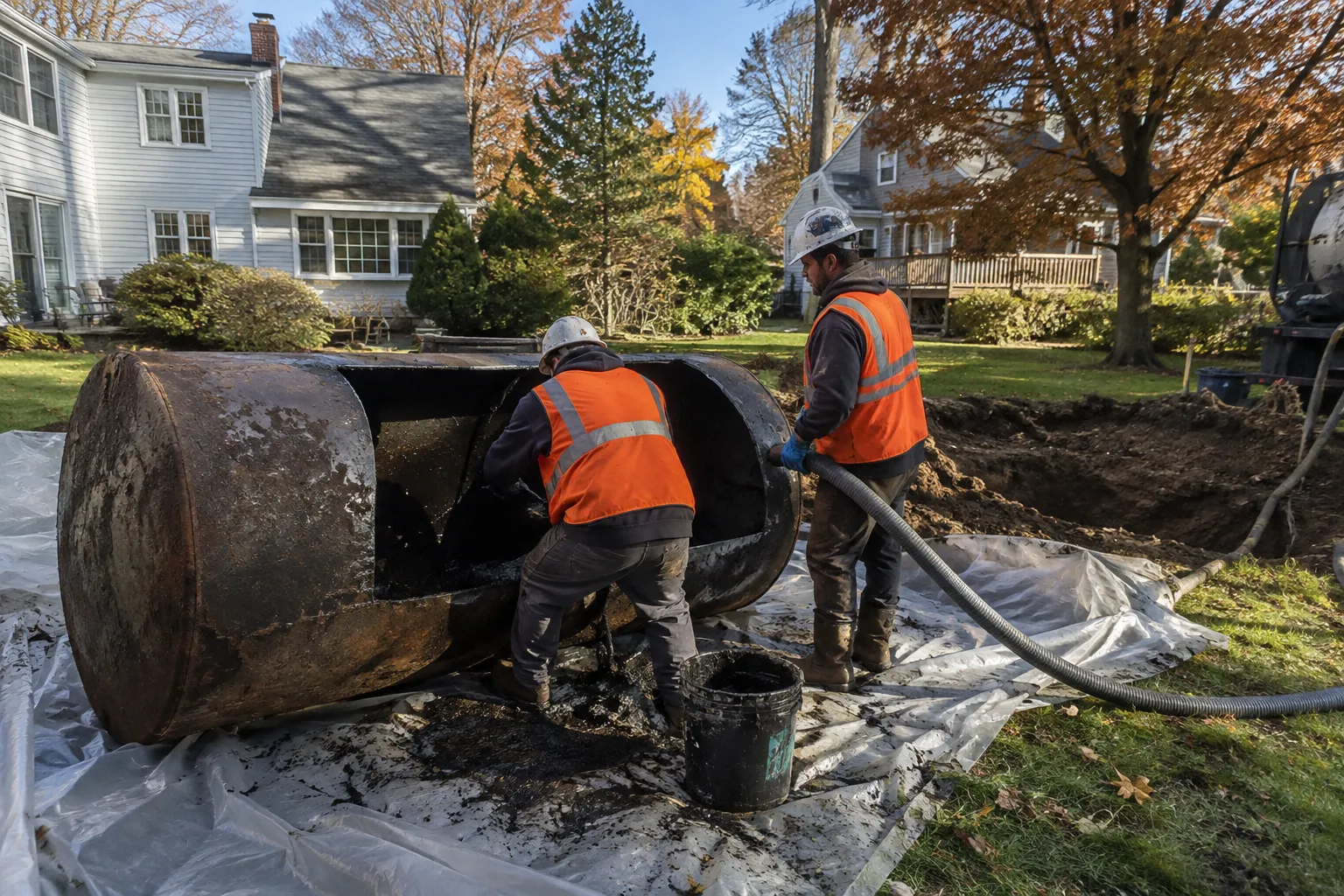
If the inspector sees holes in the tank, stained soil or an oil odor, the tank fails, the discharge is reported, and the NJDEP assigns a case number. In our experience about 30% of the tanks we remove fail, mostly from corrosion holes in tanks installed in the 1940s and 1950s. A case number starts a process. It does not automatically mean an expensive dig-out. There are two ways to close it:
Samples from the excavation, taken under a NJDEP-certified subsurface evaluator, can show contamination is within cleanup standards. The results go into a report and the case can close without a soil remediation. This is often the far less expensive route.
If contamination is above the standards, the impacted soil is excavated and disposed of, the excavation is sampled to confirm it is clean, and a report goes to the NJDEP, which issues a No Further Action letter.
Be wary of any contractor who says remediation is your only option. When a tank fails, we recommend a grab sample so we can point you to the most cost-effective path before you commit to anything.
What to expect on removal day and what happens after the tank comes out.
Once the permit is approved, an easy-access removal takes one business day on site. Township permits take anywhere from one to about twenty-one business days depending on the town, and we aim to schedule your removal within five business days of approval.
The excavation is limited to the area around the tank. We protect lawns and hardscape where we can, backfill and compact the hole, and leave the site tidy for final restoration.
The discharge is reported and the NJDEP issues a case number. There are two ways to close it: sampling that shows the soil is within cleanup standards, or a soil remediation followed by confirmation sampling and a report to the NJDEP for a No Further Action letter. Many contractors push straight to remediation; we explain both options and recommend the one your results actually support.
Yes. We remove tanks across North and Central New Jersey, including Passaic, Morris, Bergen, Union, Hudson, Middlesex and Somerset counties.
It lets us recommend the least expensive way to close your NJDEP case instead of jumping straight to a remediation contract. When the lab results come back, we call you to go over your options. The grab sample is a small added cost outside the flat-rate removal contract and is not mandatory, but we strongly recommend it. If contamination is obvious, such as free oil in the excavation, we skip it and move to remediation.
Roughly 30% of the underground tanks we remove fail the visual inspection, mostly because of corrosion holes. Most were installed in the 1940s and 1950s with an expected life of about 25 years, and steel corrodes faster where groundwater is high. A leaking tank does not automatically mean remediation. Depending on the first sample, a soil investigation of about six samples under a NJDEP-certified subsurface evaluator can often close the case for far less.
The price depends mainly on the tank’s size and where it sits on your property. Our flat rate includes the township permit, disposal of the tank contents and backfilling the excavation. Final restoration such as blacktop or concrete is not included. Watch out for contracts with open-ended terms and long lists of line items, which can add thousands to the estimate. Call (973) 922-9002 with the tank size and location for an exact number.